Define Double Bar Line In Music. Double bar line these indicate some change in the music, such as a new musical section, a new key signature, or a new time signature. On the staff, bar lines provide boundaries and structure and can also give a musician directions. Single barlines divide the staff into measures; The number two is typically centered over the sign, but is technically not required. Want to thank tfd for its existence?
There are other bars that contain important information for sheet music. A double bar line like this indicates the end of a section of music. Definition used to separate two sections or phrases of music. Dotted bar line these can be used to subdivide measures of complex meter into shorter segments for ease of reading. It indicates the end of a section of a song.
Reading Music Lesson #33: Double Bar Lines - Music Reading ... from www.musicreadingsavant.com Double bar line, double barline used to separate two sections or phrases of music. Double bar line these indicate some change in the music, such as a new musical section, a new key signature, or a new time signature. This is also known as a terminal double bar or period double bar. Double line is usually used when a major change occurs in the music, such as a keychange or metrechange. At the end of the piece, composers. It indicates the end of a section of a song. Definition used to separate two sections or phrases of music. A bold double bar line indicates the conclusion of a movement or an entire composition.
Dotted bar line these can be used to subdivide measures of complex meter into shorter segments for ease of reading.
Subdivides long measures of complex meter into shorter segments for ease of reading, usually according to natural rhythmic subdivisions. At the end of the piece, composers. Single barlines divide the staff into measures; A measure in music is the space between two vertical bar lines on a staff. It indicates the end of a section of a song. Time signatures indicate the type and quantity of notes that are in each measure. Moments in pieces with major changes, such as a key change or a change in tempo, are often marked with a double barline, constructed using two normal barlines. The top number is the number of notes per measure, and the bottom is the. Bold double bar line these indicate the conclusion of a movement or of a composition. A double barline refers to two thin, vertical lines used to separate different sections of a musical passage. This is a form of the double barline (or more commonly double bar) and has two bars with the second being thicker than the first. A barline (or bar line) is a vertical line used to build a musical staff. The final bar line tells you that the song is over.
Dotted bar line these can be used to subdivide measures of complex meter into shorter segments for ease of reading. Time signatures indicate the type and quantity of notes that are in each measure. Double bar line (plural double bar lines) a symbol in musical notation used to separate two sections or phrases of music. The number two is typically centered over the sign, but is technically not required. Also used at changes in key signature or major changes in style or tempo.
Music Theory Basics (Steps and Time Signatures) from www.cinderzelda.com In music, a tie is a curved line between two notes that joins their time values together so that they are played as if they were one note. Definition used to separate two sections or phrases of music. A double bar line (or double bar) can consist of two single bar lines drawn close together, separating two sections within a piece, or a bar line followed by a thicker bar line, indicating the end of a piece or movement. The double bar line marks the beginning of another section, another moment in the song. This is the exact same as a single bar line with one difference: This is a form of the double barline (or more commonly double bar) and has two bars with the second being thicker than the first. Often, double lines are used to divide one complete musical idea from another. Single barlines divide the staff into measures;
Double bar lines are used by the composer to show that a certain section of the song came to an end.
It indicates the end of a section of a song. A double bar line, not to be confused with the For example, if you were to tie two minims (each worth two beats) you would play them as if they were a semibreve (worth four beats). Two adjacent vertical lines or a heavy single line separating principal sections of a musical composition examples of double bar in a sentence recent examples on the web the new bar vetti, 727 e. A double bar line (or double bar) can consist of two single bar lines drawn close together, separating two sections within a piece, or a bar line followed by a thicker bar line, indicating the end of a piece or movement. Bold double bar line these indicate the conclusion of a movement or of a composition. The top number is the number of notes per measure, and the bottom is the. Time signatures indicate the type and quantity of notes that are in each measure. A double bar line is also used to signify changes in key signature, time signature or major change in style and tempo. The final bar line tells you that the song is over. A double bar line (or double bar) can consist of two single bar lines drawn close together, separating two sections within a piece, or a bar line followed by a thicker bar line, indicating the end of a piece or movement. It indicates that this is the end of the composition or of a movement of a composition. Also used at changes in key signature or major changes in style or tempo.
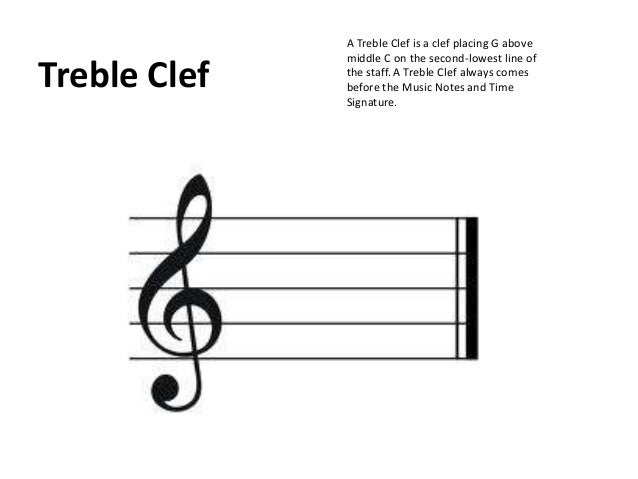
Pay attention because time and even the tonality may change. Double bar line (noun) a symbol in musical notation used to separate two sections or phrases of music, and to start and end a musical piece. A bold double bar line indicates the conclusion of a movement or an entire composition. At the end of the piece, composers. The other type of double bar line has a second line which is thicker than the first.
Understanding parts of a music staff from image.slidesharecdn.com Double bar line (noun) a symbol in musical notation used to separate two sections or phrases of music, and to start and end a musical piece. Pay attention because time and even the tonality may change. Also used at changes in key signature or major changes in style or tempo. On the staff, bar lines provide boundaries and structure and can also give a musician directions. It indicates the end of a section of a song. A double bar line, not to be confused with the Definition used to separate two sections or phrases of music. He drew a line on the chart.
This is also known as a terminal double bar or period double bar.
The top number is the number of notes per measure, and the bottom is the. A single vertical line that indicates the end of one measure and the beginning of another. A double bar line (or double bar) can consist of two single bar lines drawn close together, separating two sections within a piece, or a bar line followed by a thicker bar line, indicating the end of a piece or movement. The double bar line marks the beginning of another section, another moment in the song. The other type of double bar line has a second line which is thicker than the first. Note that double bar refers not to a type of bar (i.e., measure), but to a type of bar line. A bold double bar line indicates the conclusion of a movement or an entire composition. Symmetric, open shape, monochrome, contains straight lines, has crossing lines. A bar graph is a graphical display of data using single bars of various heights. Subdivides long measures of complex meter into shorter segments for ease of reading, usually according to natural rhythmic subdivisions. This is a form of the double barline (or more commonly double bar) and has two bars with the second being thicker than the first. A measure in music is the space between two vertical bar lines on a staff. The last barline in a composition.
Subdivides long measures of complex meter into shorter segments for ease of reading, usually according to natural rhythmic subdivisions bar line in music. The other type of double bar line has a second line which is thicker than the first.