Introduction And Coda In Music Meaning : Florence Price Symphony No 3 / All worksheets, power points and handouts come in american and english versions.. In music notation, you'll specifically see a coda sign to indicate where it begins. We then jump to the coda. The italian phrase al coda instructs a musician to move immediately to the next coda, and can be seen in the commands dal segno al coda and da capo al coda. How to use coda in a sentence. An exposition, a development, and a recapitulation.
The coda sign is shown below: It may be as simple as a few measures, or as complex as an entire section. In music notation, the coda symbol, which resembles a set of crosshairs, is used as a navigation marker, similar to the dal segno sign. And, a coda is used to indicate where the song goes after the final repetition of a specific section is complete. There is no special sign to find here first before repeating.
Introduction To Music Wikiversity from upload.wikimedia.org Al coda is a variation. About press copyright contact us creators advertise developers terms privacy policy & safety how youtube works test new features press copyright contact us creators. It may be as simple as a few measures, or as complex as an entire section. Alla coda. nowadays, this phrase is seldom seen; This article will explain fundamentals of aaba song form, also called american popular song form and ballad form, and provides examples of it being used in popular songs.for simplicity aaba song form will be used throughout the rest of this article. The coda here is the final bar. It is used where the exit from a repeated section is within that section rather than at the end. Technically, it is an expanded cadence.
We then jump to the coda.
Music appreciation teaches people what to. Al coda is a variation. To keep from getting confused, pay a quick visit to the d.s. About press copyright contact us creators advertise developers terms privacy policy & safety how youtube works test new features press copyright contact us creators. The coda here is the final bar. Change in texture, 12 bars in length, ends on half cadence. It can technically be considered a longer cadence. The segno marks a place to which we must jump when we find one of these terms:. Also note a repetition of the last four bars. Are often used with the italian phrase 'al coda' (to the coda). Coda comes from the latin word cauda, which means tail. Coda means the tail in this case of let it be it is only one bar. The instruction to coda indicates that, upon reaching that point during the final repetition, the performer is to jump immediately to the separate section headed.
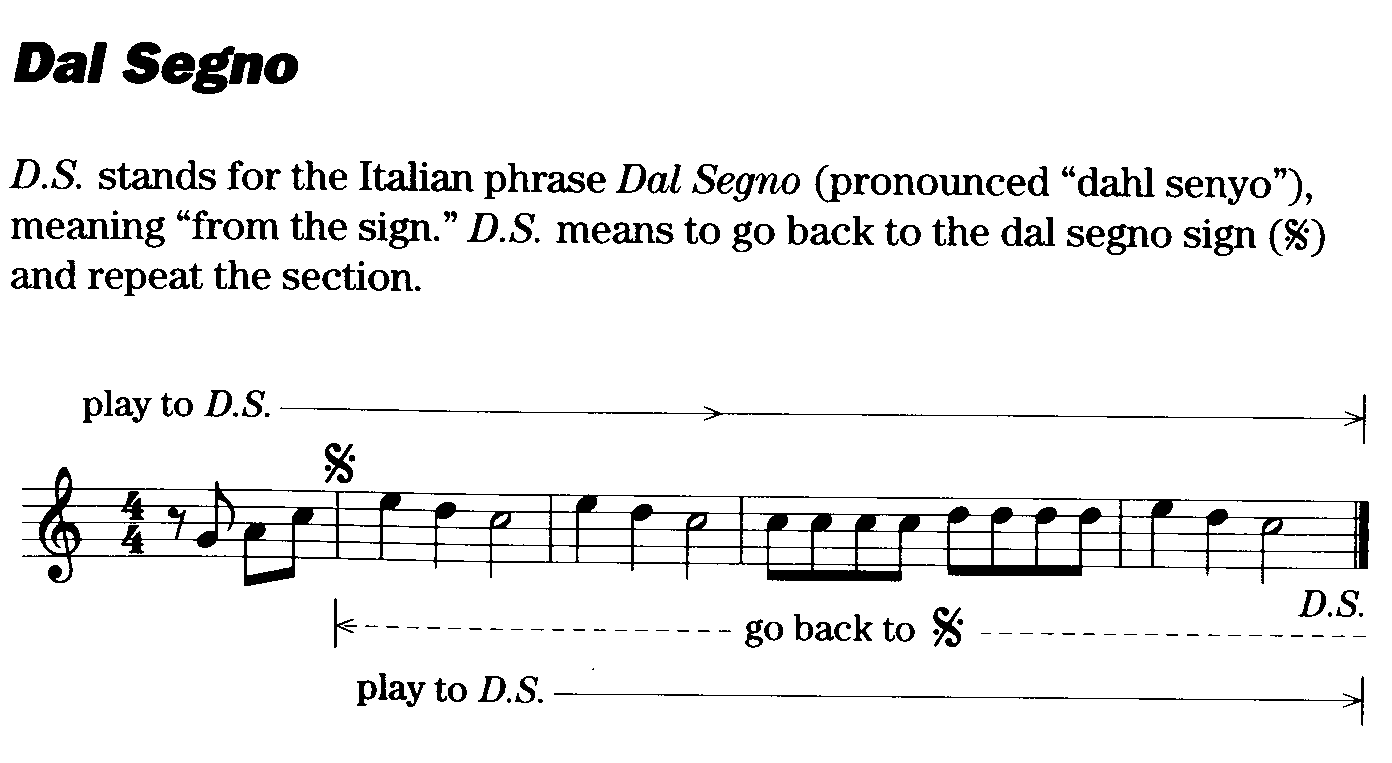
To keep from getting confused, pay a quick visit to the d.s. It is used where the exit from a repeated section is within that section rather than at the end. Does the dal segno symbol mean repeat the previous passage? How to use coda in a sentence. An exposition, a development, and a recapitulation.
Untitled from www.music-mind.com We then jump to the coda. Also note a repetition of the last four bars. A coda is a closing section of a piece a music that is notated separately from the main part of the work. In this case we jump not to the segno but to the first measure. Al coda, 1st time and 2nd time bars. The instruction to coda indicates that, upon reaching that point during the final repetition, the performer is to jump immediately to the separate section headed. Coda definition, a more or less independent passage, at the end of a composition, introduced to bring it to a satisfactory close. In music notation, the coda symbol, which resembles a set of crosshairs, is used as a navigation marker, similar to the dal segno sign.
In music, a coda (ˈkoːda) (italian for tail, plural code) is a passage that brings a piece (or a movement) to an end.
It is absolutely essential to the craft of songwriting that the writer sing the melody, feel it in the voice, reach for the high notes, and focus on experiencing the relationship between the lyric and the melody. The coda here is the final bar. How to use coda in a sentence. It may be as simple as a few measures, or as complex as an entire section. It is used where the exit from a repeated section is within that section rather than at the end. As this article is focused on providing a basic understanding of aaba song form in the modern era, some root musical forms or classifications of. And, a coda is used to indicate where the song goes after the final repetition of a specific section is complete. Normally it goes after a repeat with dal segno sign or to coda, it's a musical term in italian it means go to the sign, play from the sign but don't repeat as you finished before there is a special ending or cadence to bring the music to a close. The italian phrase al coda instructs a musician to move immediately to the next coda, and can be seen in the commands dal segno al coda and da capo al coda. But this doesn't mean that the coda is not valuable as a compositional device, so don't misunderstand what i'm saying. Does the dal segno symbol mean repeat the previous passage? In music, a coda (ˈkoːda) (italian for tail, plural code) is a passage that brings a piece (or a movement) to an end. Coda definition, a more or less independent passage, at the end of a composition, introduced to bring it to a satisfactory close.
It is used where the exit from a repeated section is within that section rather than at the end. Also note a repetition of the last four bars. That ending is called in music nomenclature coda. This article will explain fundamentals of aaba song form, also called american popular song form and ballad form, and provides examples of it being used in popular songs.for simplicity aaba song form will be used throughout the rest of this article. It is used where the exit from a repeated section is within that section rather than at the end.
How To Read Coda Signs Segnos from www.liveabout.com An exposition, a development, and a recapitulation. But this doesn't mean that the coda is not valuable as a compositional device, so don't misunderstand what i'm saying. It is used where the exit from a repeated section is within that section rather than at the end. This segno refers to an earlier same segno, probably at the beginning of the 3rd verse of let it be. Coda comes from the latin word cauda, which means tail. As this article is focused on providing a basic understanding of aaba song form in the modern era, some root musical forms or classifications of. A coda is a passage at the end of a piece of music that brings the music to a close. In this case we jump not to the segno but to the first measure.
Technically, it is an expanded cadence.
It is used where the exit from a repeated section is within that section rather than at the end. Since coda is feminine in the italian language, the correct phrasing would be d.s. In music notation, the coda symbol, which resembles a set of crosshairs, is used as a navigation marker, similar to the dal segno sign. Coda in music appreciation music appreciation is the process of developing an understanding and appreciation of music as a form of artistic expression. An exposition, a development, and a recapitulation. Nope, that is only for d.s. Conjunct and disjunct motion, working together, usually produce a good result. Al coda is a variation. Tail) in musical composition, a concluding section (typically at the end of a sonata movement) that is based, as a general rule, on extensions or reelaborations of thematic material previously heard. It may be as simple as a few measures, or as complex as an entire section. But this doesn't mean that the coda is not valuable as a compositional device, so don't misunderstand what i'm saying. It is used where the exit from a repeated section is within that section rather than at the end. It has been used widely since the middle of the 18th century (the early classical period).
In music, a coda (ˈkoːda) (italian for tail, plural code) is a passage that brings a piece (or a movement) to an end coda in music meaning. In music, a coda (ˈkoːda) (italian for tail, plural code) is a passage that brings a piece (or a movement) to an end.